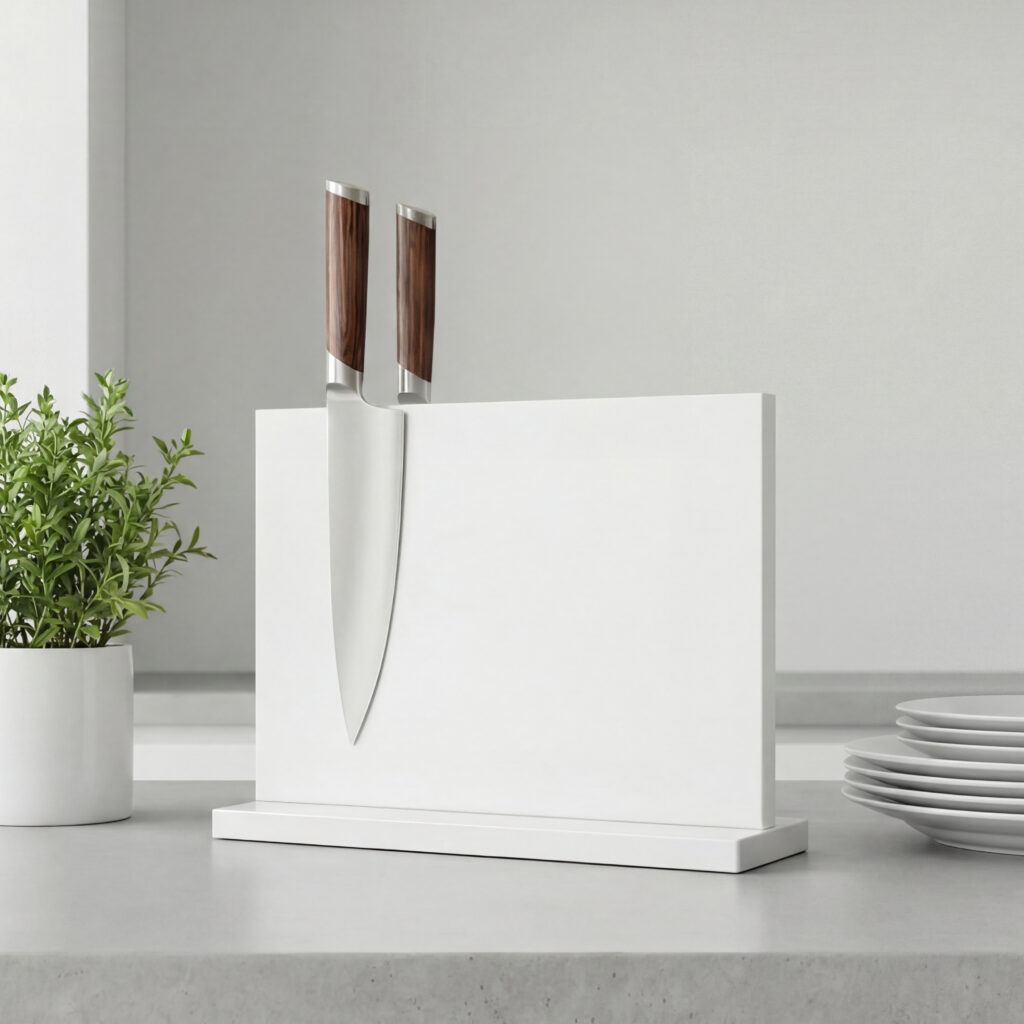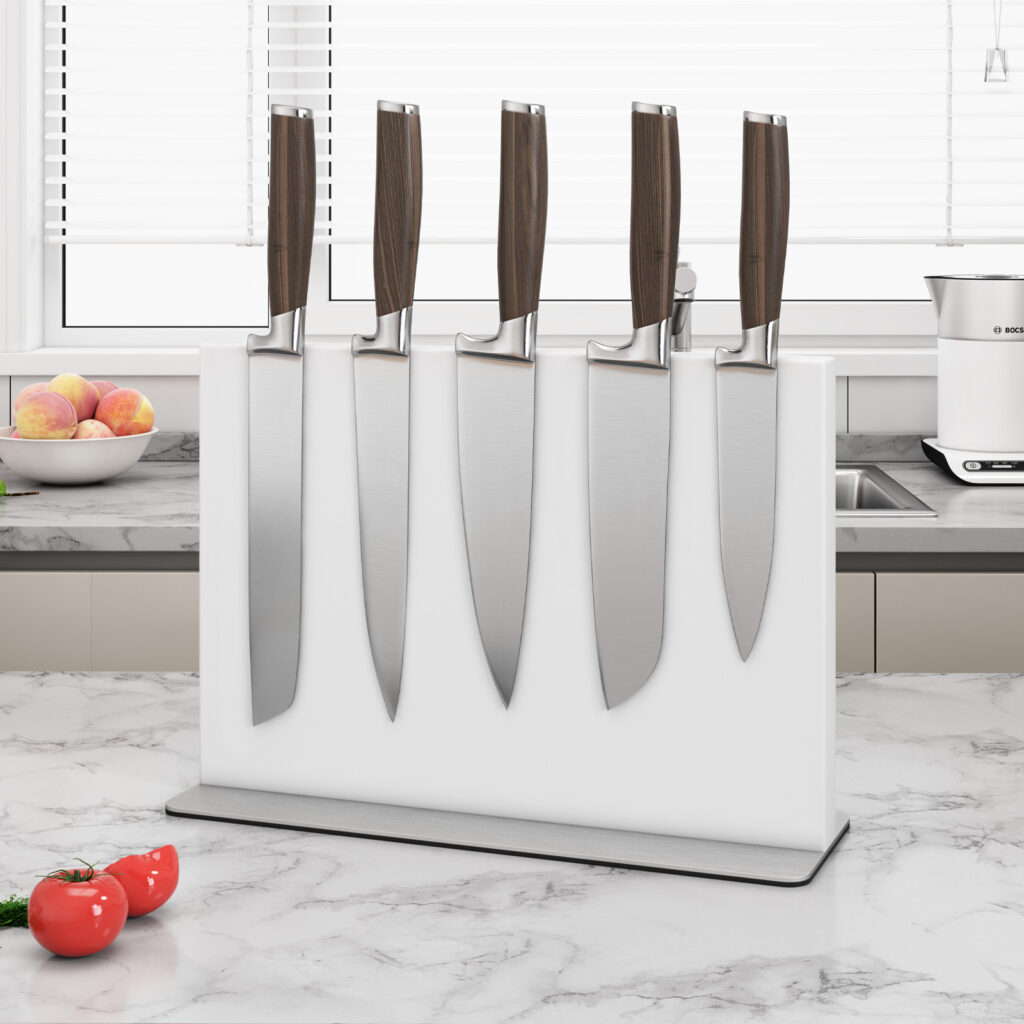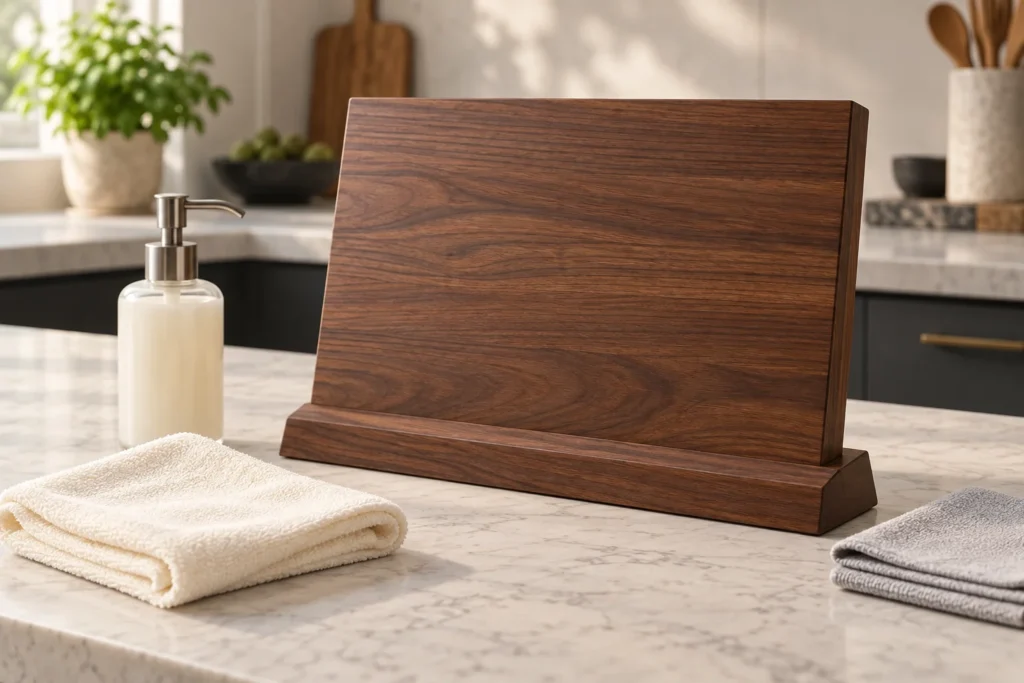
AI-generated concept illustration; not a THMINS product photograph, installation diagram or performance test.
A knife storage routine begins before the knife reaches its holder. Decide how it moves from food preparation to cleaning, drying and its normal storage position. This helps prevent clean knives being mixed with washing-up clutter or left in an unexpected place.
Follow the knife maker for cleaning
Use the care instructions for the actual knife, including any requirements for its handle material. ZWILLING, for example, recommends hand cleaning with lukewarm water, mild dish soap and a non-scratch cloth or sponge. That knife-care advice does not automatically approve the same cleaning method for a wooden magnetic holder. ZWILLING knife care.
Keep a knife visible and separate while attending to it. Avoid leaving it concealed under dishes or in water where another person might reach without seeing the blade.
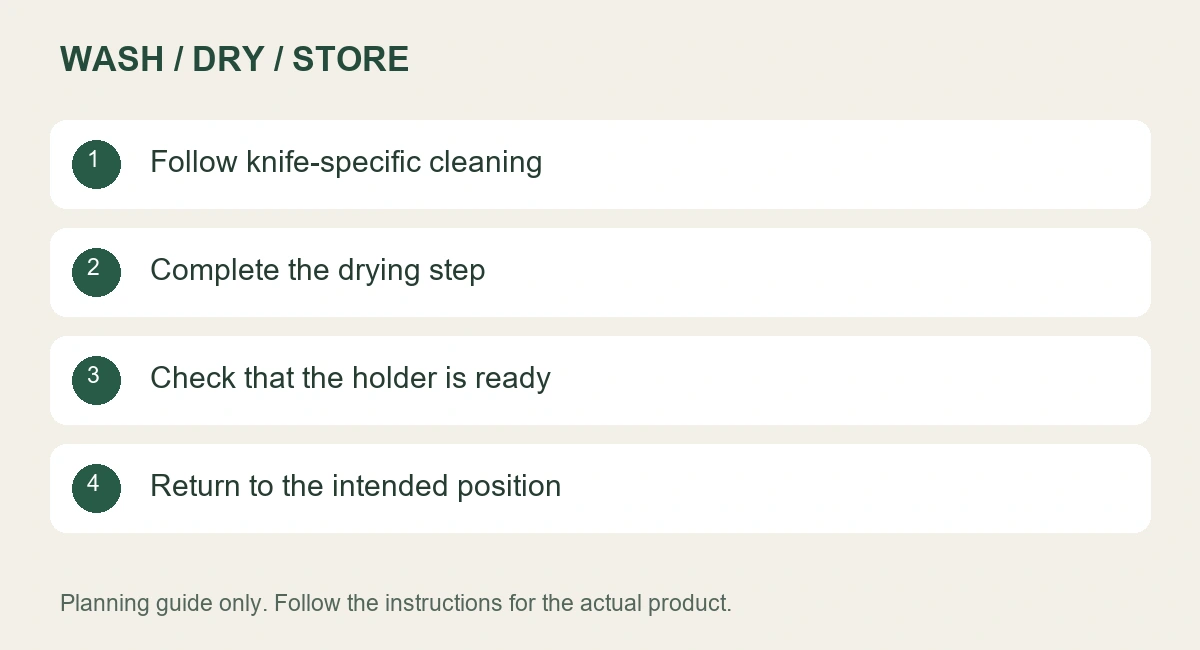
Illustrated planning checklist; follow model-specific instructions.
Give drying its own place in the sequence
Dry the knife according to its care instructions before returning it to storage. Do not treat a magnetic board as a drying rack. Check the handle and the area where it meets the blade as well as the broad blade surface.
Choose a clear working area for this step, away from the clutter of an ongoing wash-up. Handle the knife carefully following the maker’s guidance; a hurried routine around exposed edges is not improved by storing the knife sooner.
Return it to a prepared position
Before replacing the knife, make sure its intended position is clear and the holder is ready for use. If the face needs cleaning, put the knife in appropriate protected temporary storage first. Follow the holder’s separate material and finish instructions.
| Stage | Practical objective |
|---|---|
| Clean | Remove food residue using knife-specific guidance |
| Dry | Complete the knife’s care process before storage |
| Check | Confirm the holder and intended position are ready |
| Store | Return the knife using the approved placement method |
Make the routine work for everyone
In a shared kitchen, agree whether the person washing a knife also dries and returns it. Keep the temporary storage location consistent. An unexplained knife beneath a cloth creates uncertainty for the next person using the counter.
Give each stage a clear beginning and end
Arrange the routine around the busiest cleanup period in your household. If dishes accumulate after a shared meal, reserve a clear place for attending to knives before the surrounding area becomes crowded. Agree who completes that task and where the knives remain protected if it cannot be finished immediately. This makes the sequence practical in the kitchen you actually use, rather than relying on an always-empty sink or counter.
The preparation stage ends when the knife is no longer needed for the current task. The cleaning stage follows the knife maker’s instructions. Drying is completed before storage, and storage means returning the knife to an appropriate protected or approved position. Treating these as distinct stages helps prevent a half-cleaned or damp knife from being placed wherever there happens to be room.
You do not need a complicated system of labels. A clear work area, a known temporary storage method and an agreed return position can be enough. The important point is that another household member can understand where the knife is in the process without lifting a towel or searching through washing-up items.
Prepare the area before handling the knife
Make sure the approved cleaning materials and a suitable drying cloth are available before beginning. Clear unrelated items from the immediate work area. This reduces the need to set a knife down unexpectedly while reaching into a cupboard or moving dishes. Keep the edge visible and follow the manufacturer’s handling guidance throughout the process.
If the sink is full of other items, reorganise the task before cleaning the knife. Do not place it out of sight among plates or utensils while waiting for space. A separate, appropriate protected location is preferable to an improvised hiding place that another person may not recognise.
Match the routine to the actual knife collection
Different knives may have different care requirements, particularly where handle materials or finishes differ. Keep those instructions available rather than assuming that a routine used for one knife applies to every item. The holder’s material instructions are another separate reference, even if the knife and holder both include wood or metal.
When someone else helps with cleanup, explain any special requirements before they begin. It is easier to clarify the approved process in advance than to discover afterwards that an unfamiliar knife or holder component has received an unsuitable treatment. Avoid using general product-category labels as a substitute for model-specific care information.
Keep temporary storage genuinely temporary
If the holder must be cleaned before the knives can be returned, decide where the knives will remain protected during that work. Finish the holder’s approved cleaning and drying process before reloading it. Do not return knives to a damp surface simply to clear the counter more quickly.
Once the holder is ready, return each knife to its intended position and clear away the temporary arrangement. Leaving several unofficial storage places in use can make the next meal’s routine harder to understand. Consistent final positions are especially useful when more than one person cooks or washes up.
Inspect changes without assuming their cause
If you notice a mark on a blade or the holder, inspect both items and review the relevant care guidance. A visible mark does not by itself identify the source or the appropriate treatment. Avoid escalating immediately to abrasive pads, polishing compounds or strong household cleaners in an attempt to make the surface look new.
Describe the material, model and observed change to the supplier when the instructions do not resolve it. Take photographs in a suitable setup with the knives protected. If damage affects intended use, stop using the affected item or position while obtaining guidance rather than treating a cosmetic cleaning attempt as a functional repair.
What if cleanup is interrupted?
Leave the knife in an appropriate protected location that other household members recognise, then resume the remaining care steps before returning it to normal storage. Avoid concealing it beneath a cloth or leaving it in washing-up water. The interruption should not make its location uncertain.
Does a faster routine mean skipping drying?
No. Improve the arrangement of the work area and the availability of the approved cleaning materials instead. Keeping the stages convenient can save unnecessary movement while preserving the care instructions for the knife and holder. Returning an item sooner is not useful if its required preparation for storage is incomplete.
Does a clean-looking holder need disinfection?
Appearance alone does not establish hygiene, and an unapproved disinfectant may damage a finish. Follow applicable product care instructions and ask the supplier about any specific cleaning requirement.
Can I use the same cleaner on the knife and holder?
Only if each manufacturer permits it for the relevant surfaces. See the magnetic holder cleaning guide for the questions to check before choosing a method.