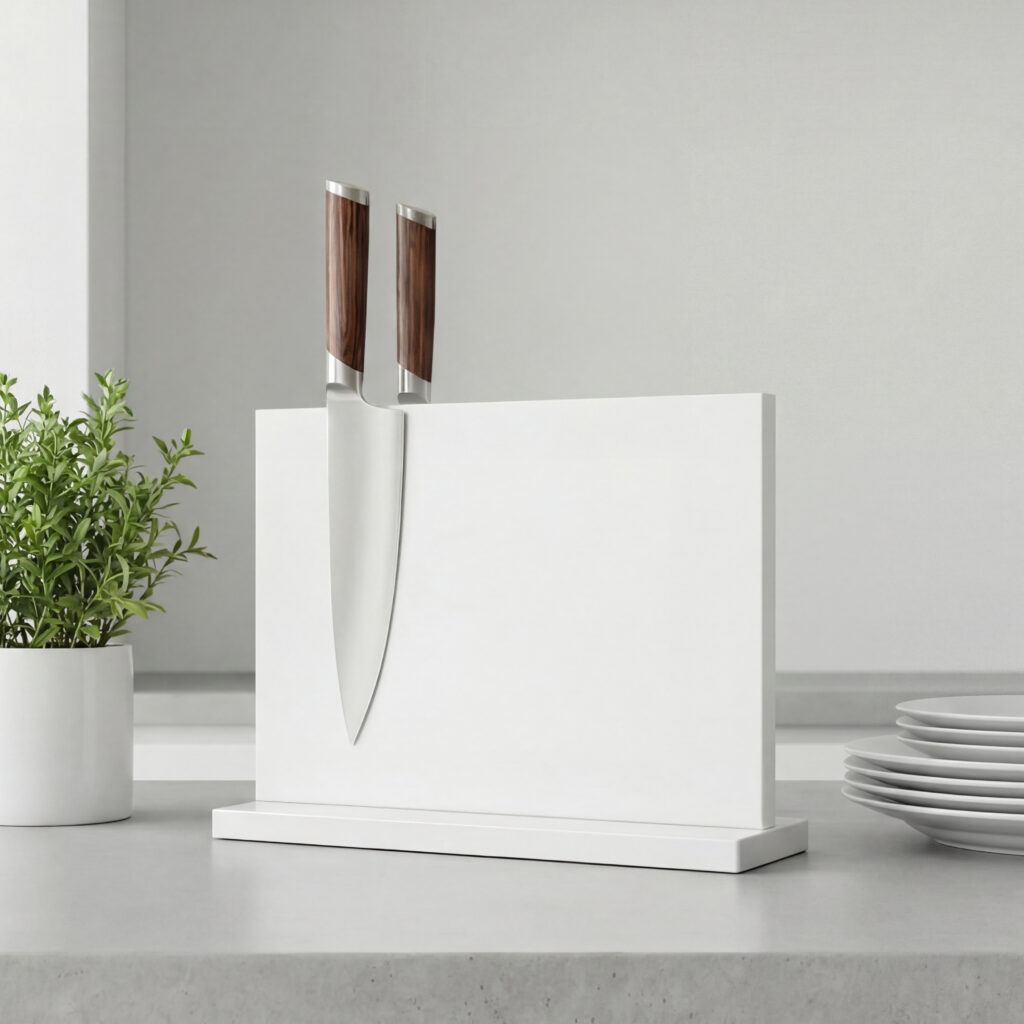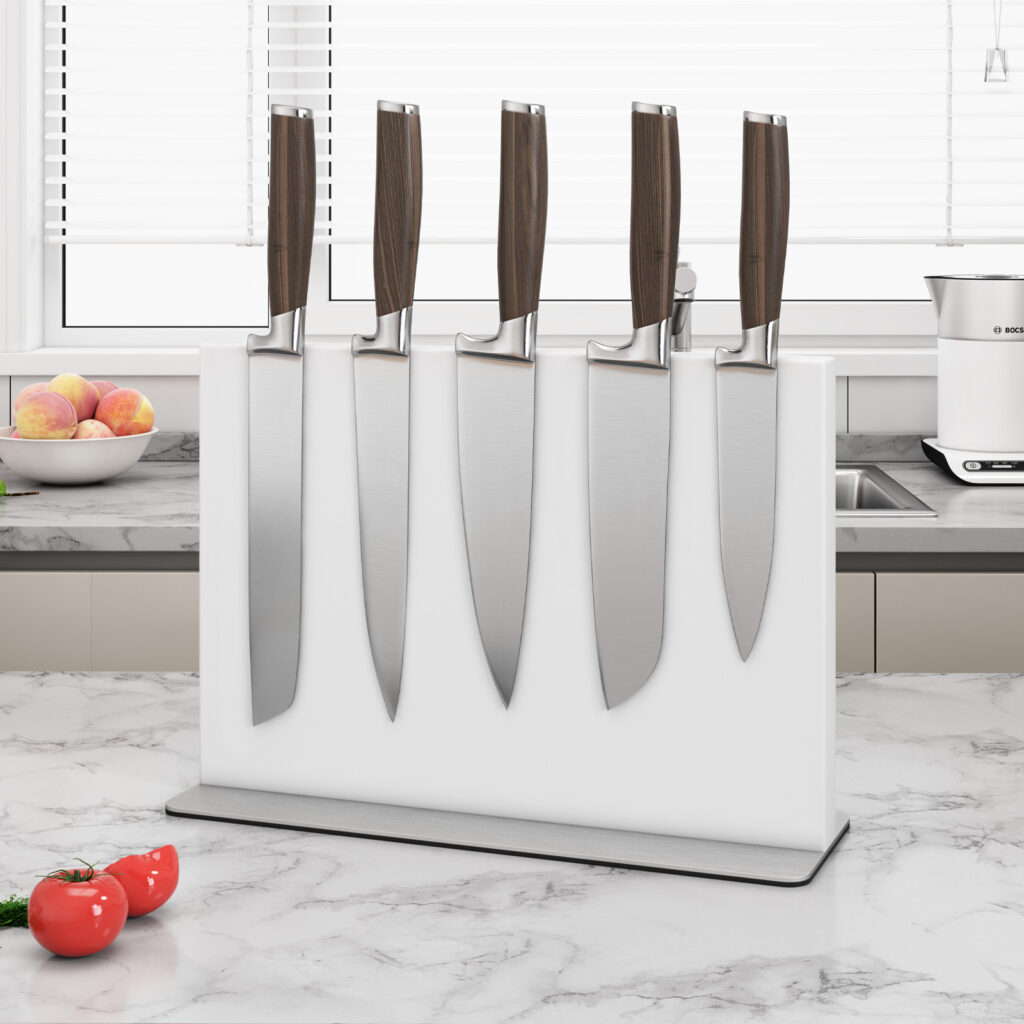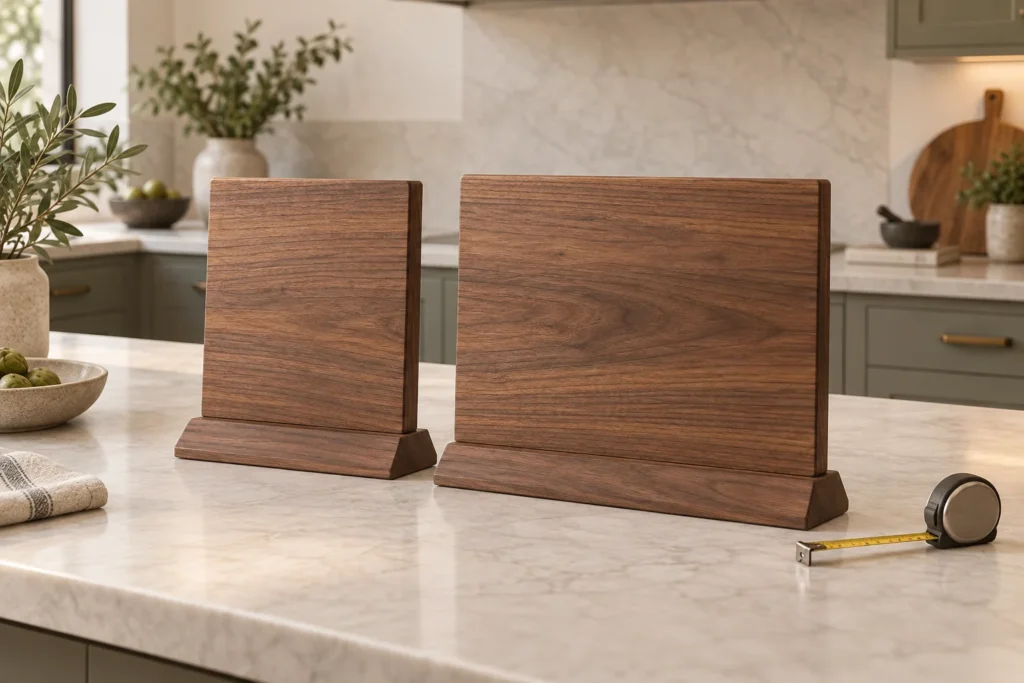
AI-generated concept illustration; not a THMINS product photograph, installation diagram or performance test.
Before placing knives on a new magnetic holder, check that the delivered product matches the model you ordered and that its instructions are available. This is an inspection and setup process, not a reason to perform an improvised strength test.
Inspect the empty holder
Unpack it on a clear surface and keep the packaging until you have checked the contents. Look for visible cracks, damaged guards, loose components or missing feet. Compare the supplied parts with the assembly instructions.
If something appears damaged, photograph it and contact the seller before loading the holder. Do not glue a loose component or replace missing hardware with an improvised substitute to start using it immediately.
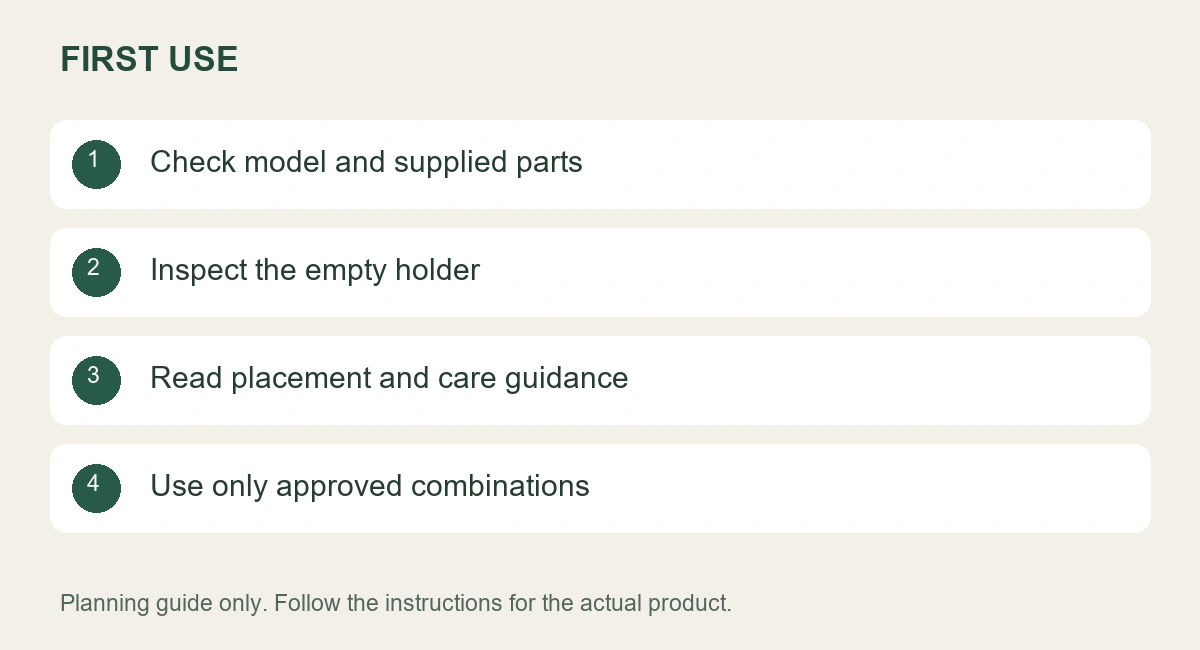
Illustrated planning checklist; follow model-specific instructions.
Confirm what the instructions cover
Check the intended knife types, placement, removal method, cleaning guidance and any assembly requirements. A product photograph is not a replacement for these details. Ask the seller to clarify a missing instruction while the holder is still empty.
If assembly is required, follow the specified sequence and hardware. Avoid guessing tightening requirements or dismantling parts that the manual identifies as fixed.
Prepare the counter location
The complete base should sit as intended on a suitable level surface. Check that the feet are present and that the surrounding counter is clean and dry. Open nearby doors and drawers and consider normal movement around the preparation area.
| Before loading | Confirm |
|---|---|
| Product identity | Correct model and supplied parts |
| Condition | No visible damage requiring seller review |
| Instructions | Placement, removal and care are understood |
| Location | Complete footprint and access are suitable |
Follow the intended first use
Load only compatible knives in approved positions. If a knife slips or the holder moves unexpectedly during ordinary handling, stop using that combination and contact the supplier. Do not repeat an unstable movement to see whether it happens again.
Adding weights, shaking the block or pulling until it tips does not provide a useful household acceptance check. A relevant demonstration identifies the holder and knife and shows normal use under stated conditions.
Separate delivery condition from product suitability
Keep a brief record of the intended arrangement as well as the delivery condition. Note which knives you plan to store and where the holder will stand. If a later support question arises, these details make it easier to explain what has changed since first use. A new knife, a different counter location or a missing component can be relevant without implying that any one of them caused the issue.
A holder can arrive undamaged and still be unsuitable for the knife or location you intended. Delivery inspection asks whether the supplied product is complete and in acceptable condition. Suitability assessment asks whether the approved configuration works with your knives and kitchen. Keep these questions separate when communicating with the seller so the issue can be understood accurately.
For example, a missing foot is a condition or completeness issue. A block that is too tall for your cabinet space is a fit issue. A knife whose compatibility has not been confirmed is a separate product-use question. Describe the specific observation rather than summarising every concern as weak magnets or poor quality.
Keep the first-use area clear
Choose a clear work area for unpacking and reading instructions. Remove packaging pieces from the intended counter location and ensure the complete base can sit as designed. Keep the knives in their existing protected storage until the holder has been inspected, assembled where required and placed appropriately.
Avoid combining unpacking with a busy meal preparation session. Time pressure can encourage skipping a missing instruction or placing a knife before checking its position. A short separate setup period makes it easier to identify questions while the holder is still empty and the packaging is available.
Review the supplied parts against the actual model
Use the instructions for the exact model, particularly if a product family includes several sizes or guards. A picture of another variation may show components that are not part of your order. Compare the model identifier, included hardware and assembly steps before deciding that a part is missing or that an extra component should be fitted.
If the documentation is unclear, ask the seller for the correct manual. Do not borrow assembly details from a visually similar holder. Small differences in bases, guards or fasteners can change how components are intended to fit, even when two products appear nearly identical online.
Make a clear support record without recreating a problem
If you notice damage or unexpected movement, record what happened in ordinary use and stop using the affected combination. Photograph visible condition issues with the holder empty. Include the model, the knife details where relevant, the counter surface and the recommended action you were following. This gives support staff useful information without requiring another attempt at an unstable movement.
Keep your original photographs and the order details. If you share an image publicly, remove personal information from labels or paperwork. Avoid turning a support request into an improvised demonstration with added loads or repeated tipping; that can introduce a different problem from the one you first observed.
Know what the initial check does not prove
A successful first placement does not establish suitability for every knife in the collection or every possible position. Continue to use only the combinations permitted by the product information. Check new knives separately when the collection changes, and reassess the location after moving the holder or changing the surrounding appliances.
Similarly, a visually intact surface does not establish a particular resistance to scratches, stains or cleaning chemicals. Follow the actual care instructions rather than testing the finish with household products. Ordinary care and approved use are more useful than attempts to discover the limits of the product at home.
When should I discard the packaging?
Check the seller’s current return instructions and keep the packaging long enough to resolve any initial condition or fit question. Do not assume a particular return period from another retailer or an older order. The relevant policy is the one that applies to your purchase.
Should I load every knife immediately?
Follow the model’s setup and loading instructions. Confirm compatibility and intended positions before adding knives, and do not use a maximum-capacity arrangement as a first-use test. The objective is a suitable everyday layout that you understand and can access comfortably.
What should I record for a support request?
Provide the order or model identification, a description of the issue and clear photographs taken without creating a hazardous setup. Keep personal details out of any public review images.
Should I wash the holder before use?
Follow its first-use cleaning instructions. Do not assume immersion or dishwasher cleaning is suitable. The cleaning guide introduces the material questions to check.