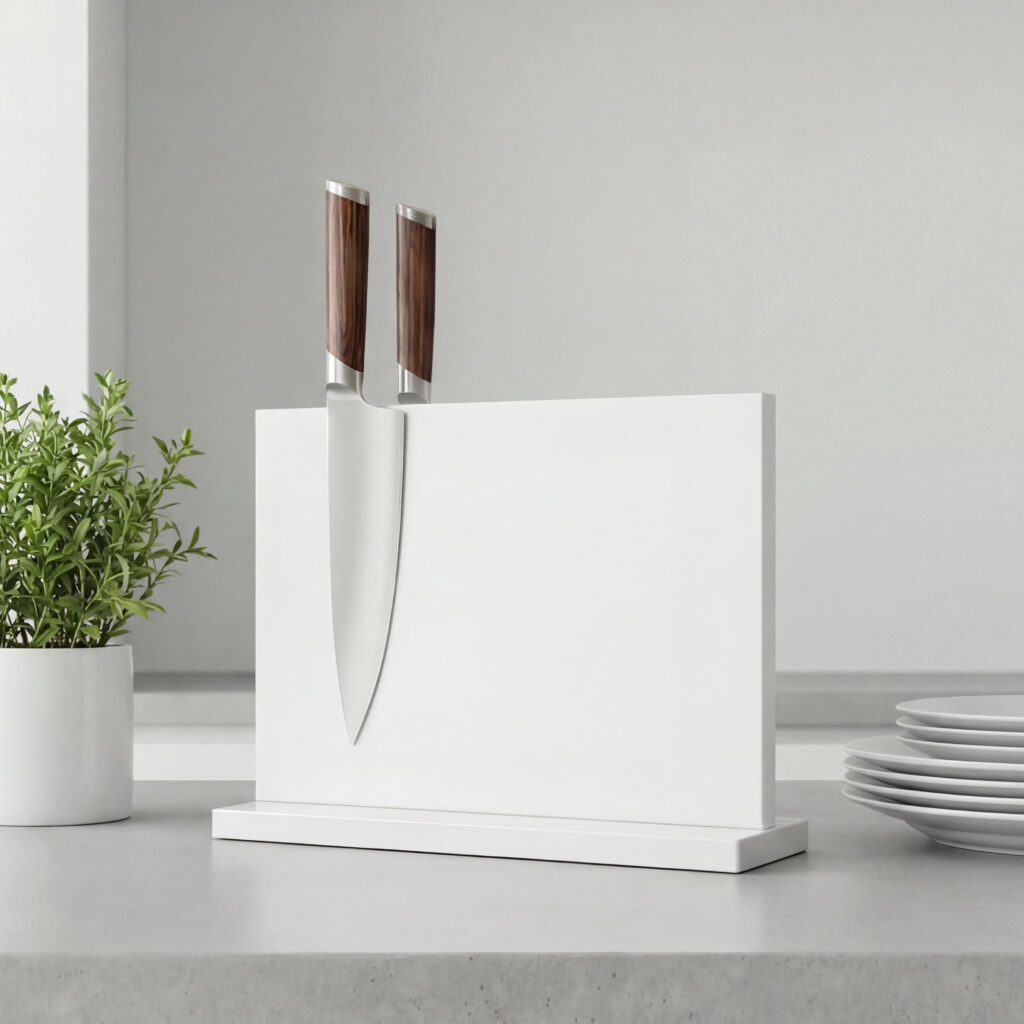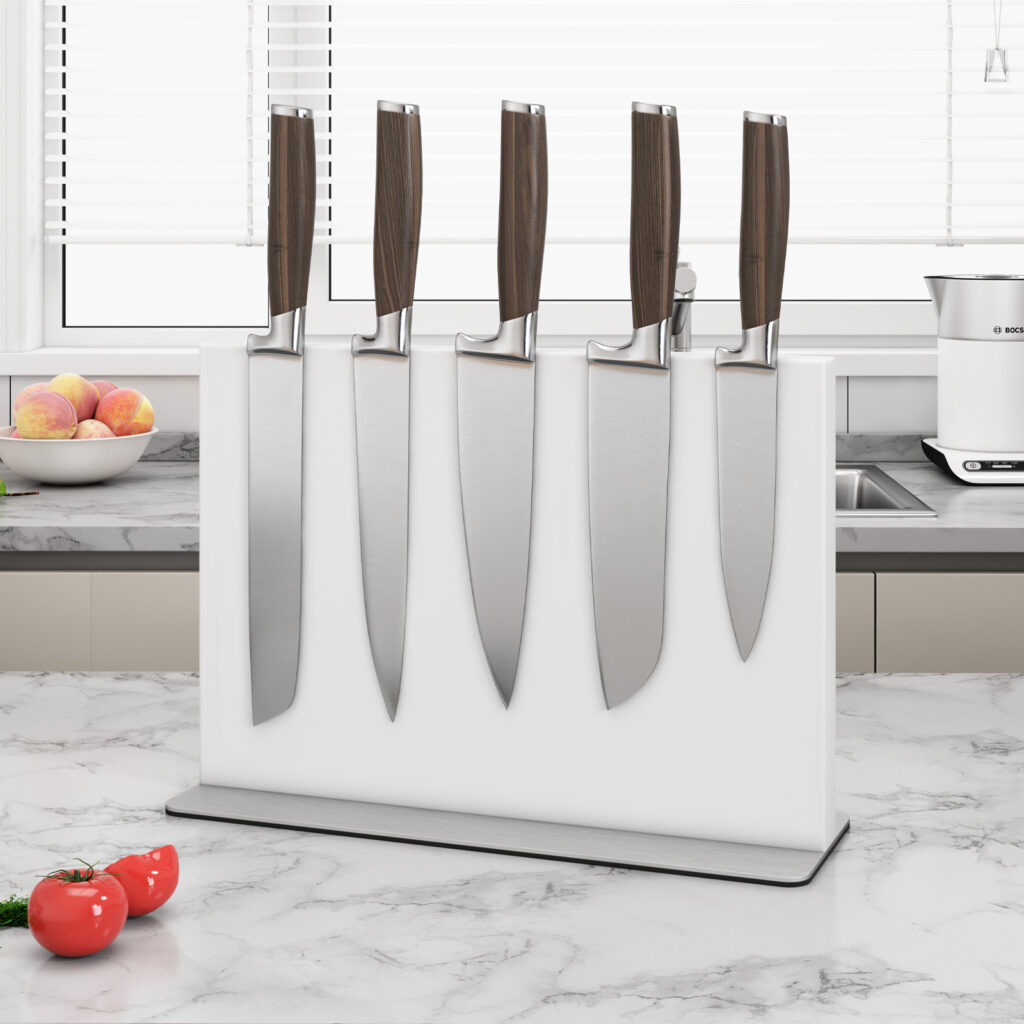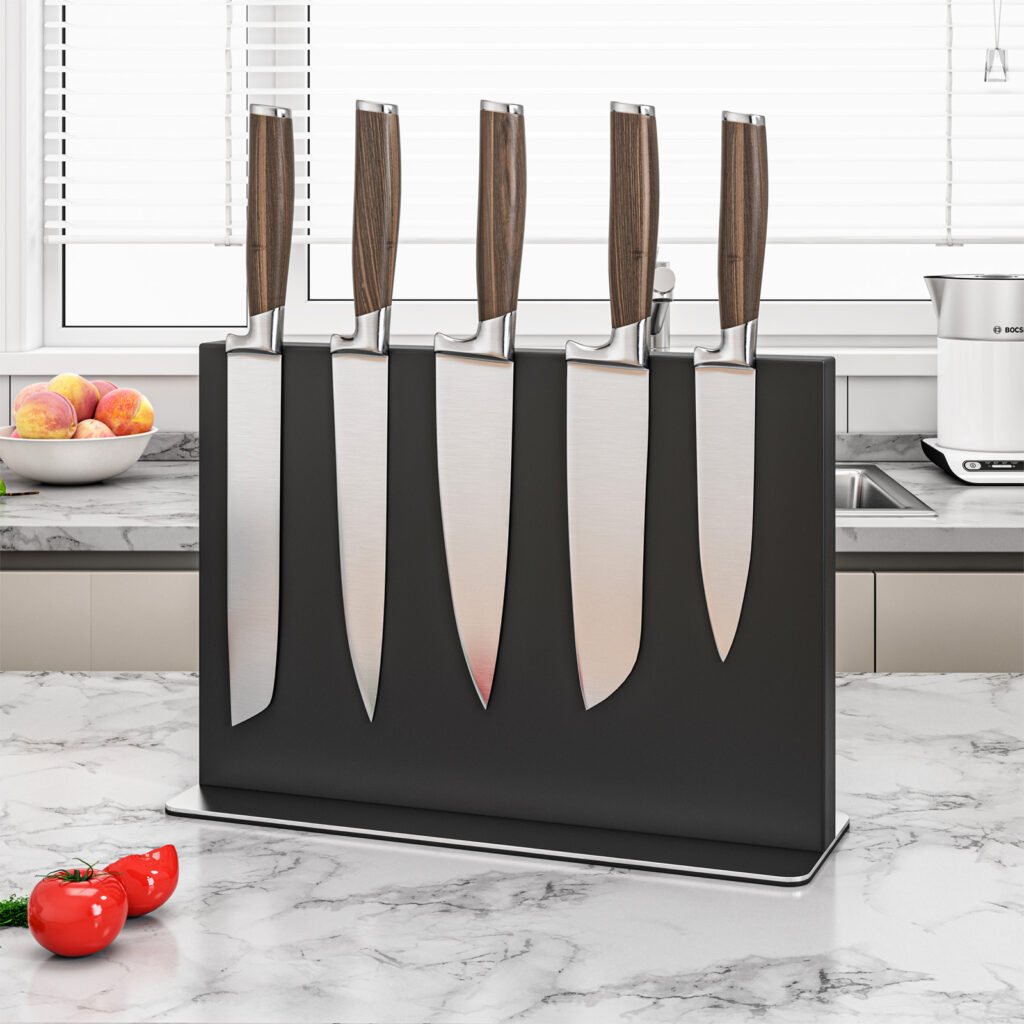
On a busy kitchen counter, storage has to do more than look acceptable. It has to stay out of the way, support quick movement, and make cleanup easier instead of harder. That is why the difference between a magnetic knife holder and a traditional knife block becomes more noticeable the more often a kitchen is used.
Both options store knives. That part is obvious. The more useful question is which one actually works better once the counter is full of ingredients, bowls, water, and normal cooking activity. For many modern kitchens, the answer depends less on tradition and more on flow.
Knife blocks still offer familiarity
A knife block is familiar for a reason. It is straightforward, stable, and easy to understand. Many people grew up with one in the kitchen, so it feels like the default storage choice. The slots keep blades separated, and everything sits in one contained object.
That familiarity is also the main advantage. If someone wants a conventional setup and does not mind a heavier countertop object, a knife block still works. It keeps knives together and does not require much explanation.
But on a busy counter, the weaknesses show up quickly. Knife blocks take up fixed surface area, they are awkward to clean around, and they often feel visually heavier than the rest of the kitchen. Once the counter is already doing several jobs, that extra bulk starts to matter.
A magnetic holder usually works faster
A countertop magnetic knife holder tends to feel faster in use. You can identify the knife you want immediately. Returning it is simple. There is no need to aim for a slot or guess where a tool fits. That can seem minor, but it improves rhythm when cooking is frequent rather than occasional.
It also creates a clearer counter. Instead of a large storage block sitting near the prep zone, the holder keeps knives visible in a slimmer format. That can make the work area feel more open even when the total footprint difference is not dramatic on paper.
Cleaning is often easier with open storage
Busy counters get dirty. That is just normal kitchen use. Crumbs collect. Water spots show up. Oil finds its way into corners. A knife block often makes that harder because it has more mass touching the counter and more awkward angles around the base.
An open magnetic holder is usually easier to wipe around and reset. The surface stays more readable, and the holder does not feel like a bulky object you have to clean around every day. That is one reason it often feels better in real kitchens than in showroom comparisons.
Visual load matters more than people think
On a quiet counter, almost any storage method can look acceptable. On a busy counter, visual weight matters. A knife block tends to add more of it. It feels thicker, darker, and more dominant, especially when several other countertop items already compete for space.
A magnetic holder often looks cleaner because the structure is slimmer and the storage logic is more open. The knives are visible, but the storage object itself does not take over the entire corner of the counter. For kitchens trying to stay modern, light, and practical, that difference is important.
Which one works better?
If the goal is tradition, familiarity, and a fully enclosed storage style, a knife block still has a place. But if the goal is a cleaner working counter, quicker access, easier cleanup, and a more modern visual profile, a countertop magnetic knife holder usually works better.
That is especially true when the kitchen is used hard. Busy counters reward storage that stays organized without feeling bulky. In that environment, a magnetic holder often feels less like an accessory and more like a better workflow decision.