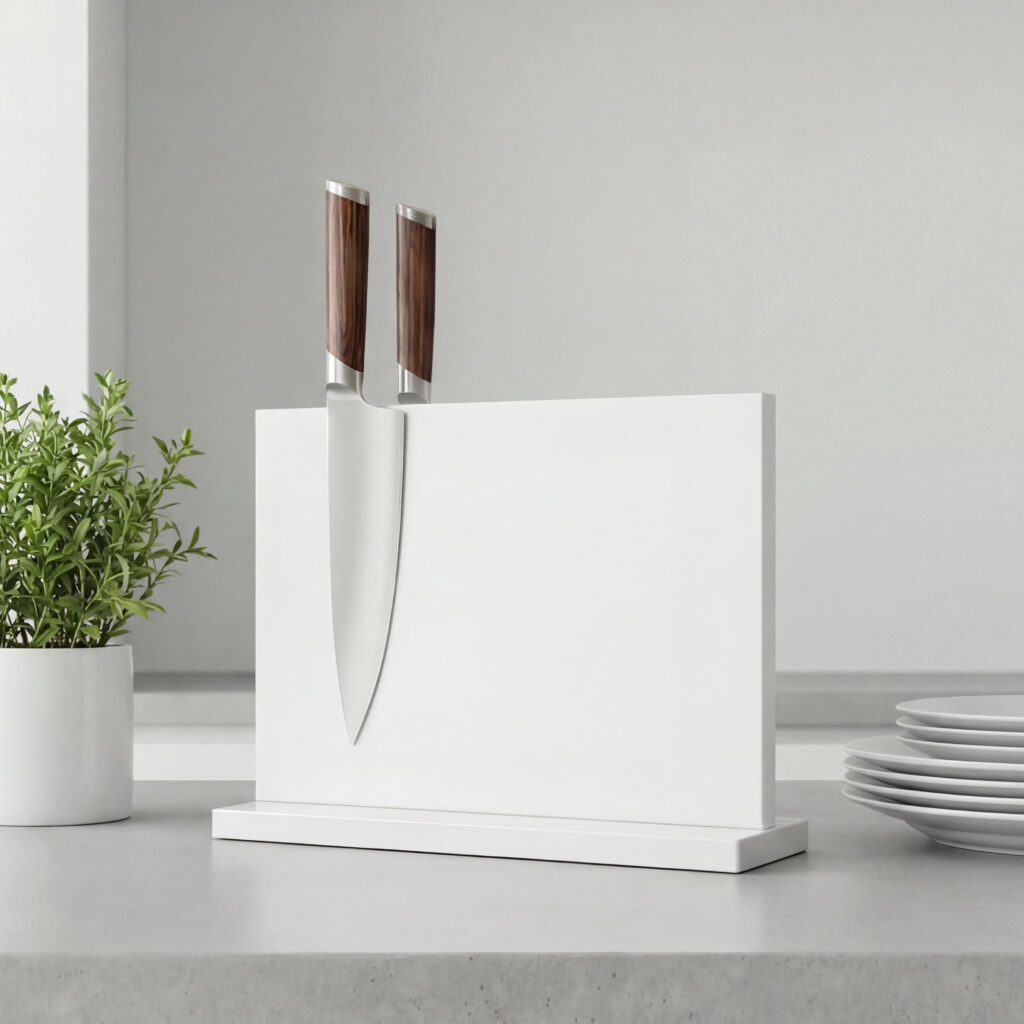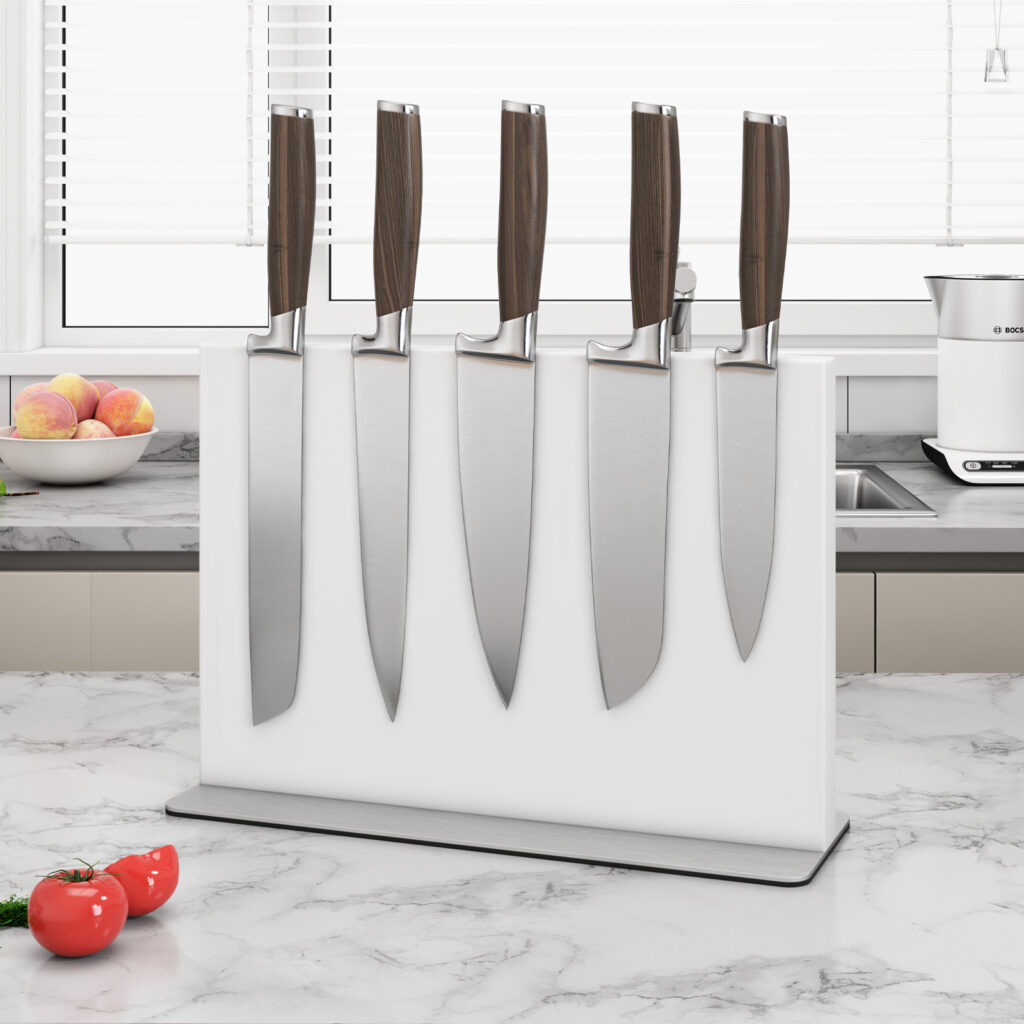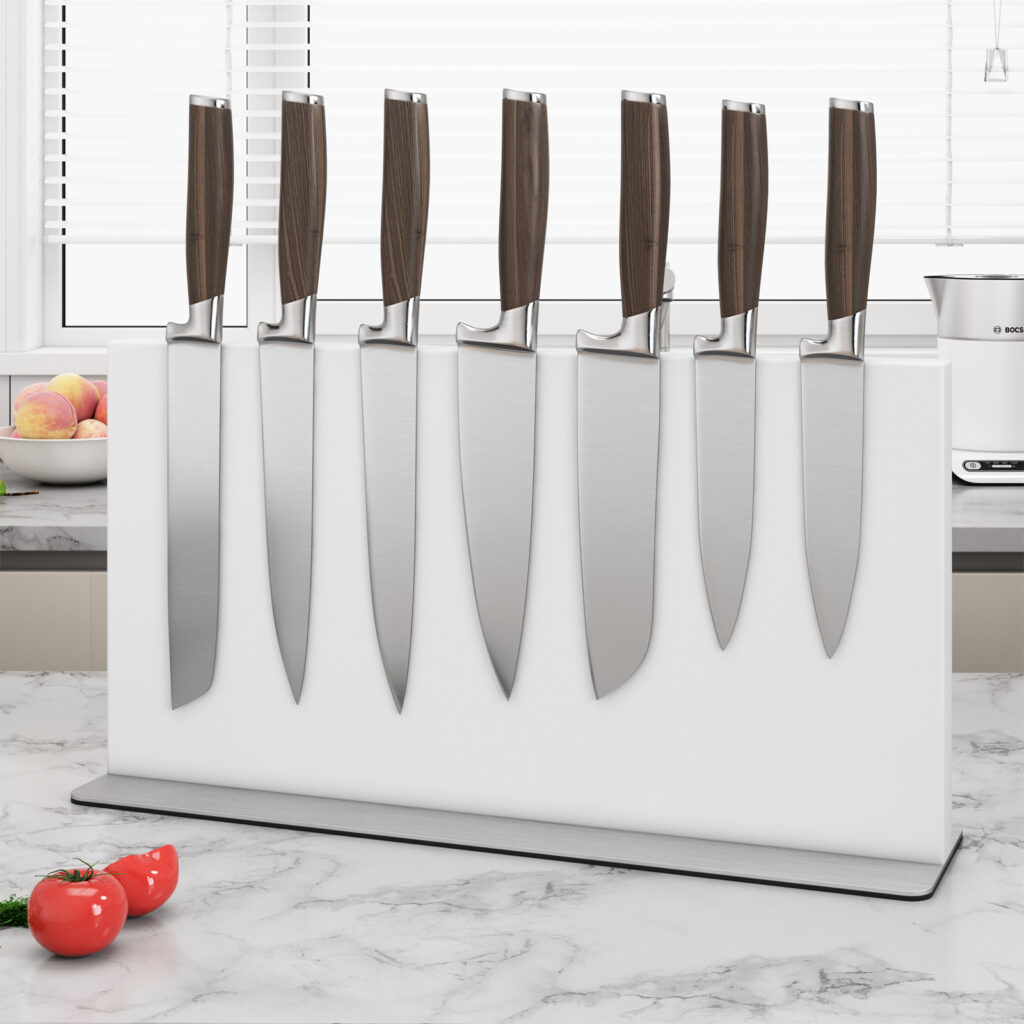
Material is often what turns a practical kitchen object into part of the room’s design language. A magnetic knife holder may be functional first, but it is still something you see every day on the counter. That makes material choice important. Acrylic, wood, and stainless steel all solve the same basic storage problem, but they shape the atmosphere of a kitchen in very different ways.
The best choice depends on the style of the space, the finishes already in the room, and how visible you want the holder to feel in daily use.
Wood feels warm and grounded
Wood is usually the easiest choice for kitchens that already lean natural, quiet, or material-led. It works well with wood cabinets, pale counters, creamy neutrals, and spaces that benefit from warmth rather than sharp contrast. A wood magnetic knife holder often feels more integrated because it reads as part of the room rather than a technical object dropped onto the counter.
If the kitchen needs softness, wood usually delivers it. It can still feel modern, but it does so in a calmer, more tactile way.
Stainless steel feels crisp and graphic
Stainless steel suits kitchens that already have a more modern or architectural tone. Black hardware, stone counters, metal fixtures, and stainless appliances usually make this material feel natural. It keeps the holder looking sharp, clean, and deliberate.
This is often the best choice for kitchens that want storage to look precise rather than warm. Stainless steel usually feels more aligned with monochrome interiors and stronger contrast.
Acrylic feels light and visually quiet
Acrylic is different from both. It tends to feel lighter, brighter, and less visually heavy on the counter. That can be a strong advantage in smaller kitchens or spaces that already have several stronger materials competing for attention.
If wood feels too warm and stainless feels too graphic, acrylic often becomes the cleaner middle path. It lets the knives stay visible without making the storage itself feel too dominant. That can work especially well in bright kitchens, apartment kitchens, and spaces where visual pressure matters.
Match the holder to the room, not the product page
The most reliable way to choose is to stop looking at the holder in isolation. Consider the cabinet color, the counter tone, the backsplash, the appliance finish, and even the type of light the kitchen gets during the day.
Acrylic may look ideal in one setting and too slight in another. Wood may feel rich in one kitchen and too warm in another. Stainless may look premium in one room and too cold in the next. Context decides more than trend.
Think about how much presence you want
Some buyers want the holder to be quietly integrated. Others want it to feel like a stronger design accent. Acrylic usually creates the least visual weight. Wood adds warmth and personality. Stainless steel gives the cleanest edge.
None of those directions is automatically better. The point is to decide what kind of presence makes the rest of the kitchen feel better, not just what looks most striking in a standalone product image.
Style works best when it supports use
A good magnetic knife holder should always support daily cooking first. But when the function is already there, material becomes the thing that determines whether the product feels truly at home in the kitchen.
That is why style is worth thinking about carefully. Acrylic, wood, and stainless steel all offer a different version of the same idea. The best one is the material that makes the kitchen feel more coherent every time you see it on the counter.