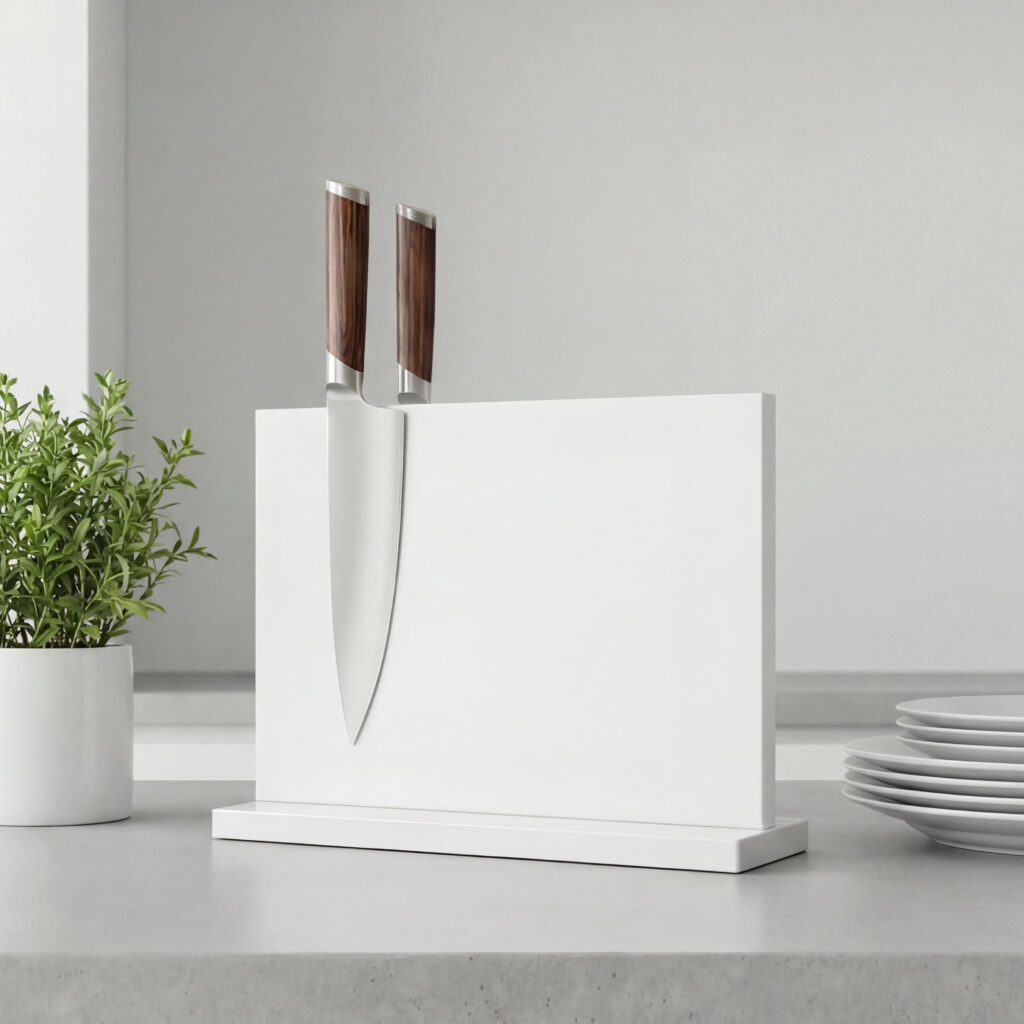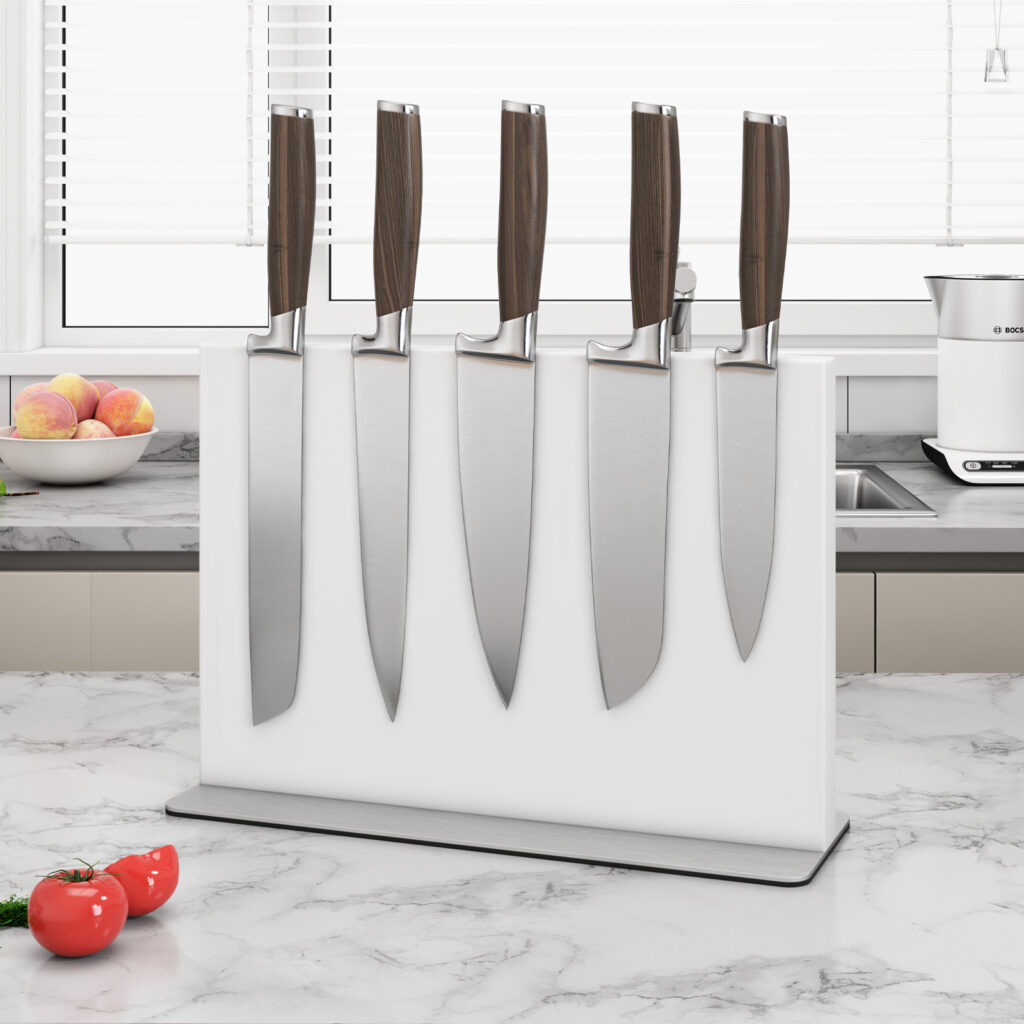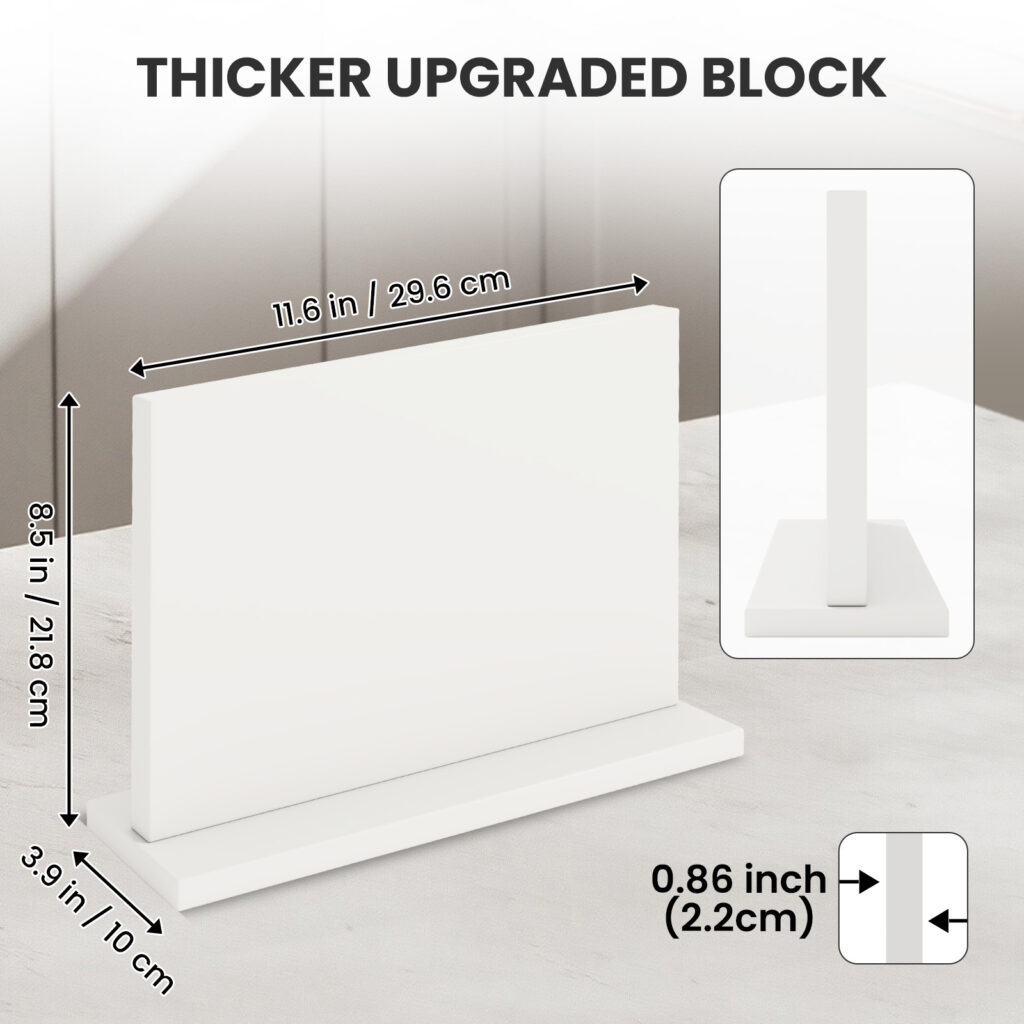
Not all kitchen storage feels the same, even when it serves the same function. Two objects can hold the same number of knives and still change the room in very different ways. That is one reason more people are moving away from the traditional knife block and toward countertop magnetic knife holders.
The difference is not only about storage capacity. It is about visual weight. A magnetic knife holder usually looks lighter because it asks for less space, uses a cleaner silhouette, and avoids the closed, bulky form that defines most slot-style blocks.
Traditional knife blocks are visually dense
A knife block is a solid mass. That is part of its identity. It has to be thick enough to contain internal slots, stable enough to stand securely, and large enough to store several knives at once. Even when the craftsmanship is good, the result is still a heavy object on the counter.
That visual density matters more than many buyers expect. In a kitchen with appliances, bowls, soap dispensers, and food already competing for space, a dense storage block adds another object that interrupts the counter line. It often reads as one more thing sitting there rather than one more thing integrated into the room.
A magnetic holder shows less mass
A countertop magnetic knife holder usually feels lighter because more of its storage logic is visible. The knives are displayed rather than buried inside a chunk of material. The structure can stay slimmer and more open. There is less bulk surrounding the function, so the holder itself feels cleaner.
This is why magnetic storage often looks more modern. It relies on restraint rather than enclosure. The knives stay close and easy to reach, but the holder does not need to become a large countertop object to do its job.
Open storage changes the whole counter line
One reason modern kitchens prefer visually lighter storage is that counters already do a lot of work. They are prep surfaces, display surfaces, and sometimes even dining surfaces in smaller homes. That makes the line of the counter important. Anything that clutters it or visually chops it up has a bigger impact than it would in a room with endless space.
A magnetic knife holder tends to preserve that line more effectively than a thick block. It still occupies space, but not in the same heavy way. The holder becomes a cleaner vertical accent instead of a bulky countertop mass.
Material still matters, but form matters first
Wood, stainless steel, and acrylic all create different moods, but the lighter feeling of a magnetic holder starts with form before material. Even a darker finish often feels cleaner in magnetic storage than it does in a traditional block because there is simply less of it sitting on the counter.
That does not mean every magnetic holder will look minimal and every knife block will look bulky. But in general, the structure of magnetic storage gives it an advantage. It carries less visual weight because it is not built around thickness and enclosure.
Why buyers notice this immediately
People often describe the change in simple terms. The kitchen feels calmer. The counter feels cleaner. The prep area seems more open. Those reactions are usually less about measurements and more about visual load. A lighter-looking storage piece changes how the room is read at a glance.
That is why the difference shows up immediately after the switch. A magnetic knife holder often feels like a cleaner design decision, not just a different storage product. It supports the kitchen without sitting on the counter like a block of storage first and a design object second.